
Writing about tsunamis can feel scary. However, when the story is told with care, even a child can understand it. So, in this article, we will explore The most devastating tsunamis on record in a clear, simple, and engaging way.
Moreover, we will explain what happened, why it mattered, and what we can learn today.
Above all, this article is written to be easy to read, highly educational, and emotionally powerful, while still being friendly and accessible.
Contents
- First of all: What is a tsunami?🐟
- Why learning about tsunamis matters🐟
- Now let’s explore The most devastating tsunamis on record🐟
- 1. The 2004 Indian Ocean Tsunami
- 2. Next, the 2011 Japan Tsunami
- 3. Then came the 1755 Lisbon Tsunami🐟
- 4. Meanwhile, the 1883 Krakatoa Tsunami🐟
- 5. Also unforgettable: The 1960 Chile Tsunami
- Common factors behind devastating tsunamis🐟
- How technology helps today🐟
- What children and adults should remember🐟
- remembering The most devastating tsunamis on record🐟
First of all: What is a tsunami?🐟
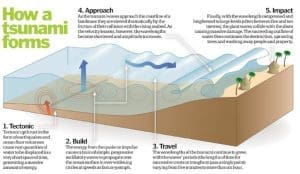
Before we dive into history, let’s start with the basics.
A tsunami is not just a big wave. Instead, it is a series of powerful ocean waves caused by sudden movements under the sea. Most often, these movements are earthquakes, but sometimes they are volcanic eruptions or landslides.
Because of this, tsunamis can travel very fast. In fact, they can cross entire oceans. By the time they reach land, enormous damage can be caused.
Why learning about tsunamis matters🐟
Understanding past tsunamis is important.
Therefore, when we study them, we learn how to protect lives in the future.
Also, by remembering these events, respect for nature is built. Nature is beautiful, but it is also powerful. Rituals and Ceremonies in Indigenous Fishing show how traditional communities honor the sea and fish with respect, balance, and gratitude.
Now let’s explore The most devastating tsunamis on record🐟
Below, you will find the most destructive tsunamis ever recorded. Each one left a deep mark on history.
1. The 2004 Indian Ocean Tsunami
What happened
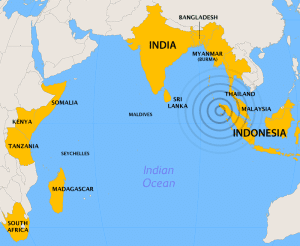
On December 26, 2004, a massive earthquake struck under the Indian Ocean. It measured 9.1 on the Richter scale, making it one of the strongest earthquakes ever recorded.
As a result, gigantic waves were created. Shortly after, coastlines across 14 countries were hit.
Why it was so devastating
- The tsunami waves reached up to 30 meters high
- Over 230,000 people lost their lives
- Many communities had no warning systems
Because of this, entire towns were destroyed in minutes.
Countries most affected
- Indonesia
- Sri Lanka
- India
- Thailand
Most importantly, this disaster changed how the world thinks about tsunami warnings.
2. Next, the 2011 Japan Tsunami
What caused it
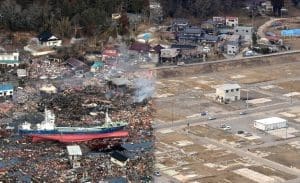
On March 11, 2011, a 9.0 magnitude earthquake shook the sea near Japan. Soon after, a powerful tsunami rushed toward the coast.
Although Japan was prepared, the waves were stronger than expected.
The shocking impact
- Waves reached 40 meters high
- Over 18,000 people died or went missing
- The Fukushima nuclear disaster was triggered
As a result, this tsunami affected not only Japan but the entire world.
Lessons learned
Because of this tragedy:
- Sea walls were redesigned
- Emergency plans were improved
- Nuclear safety rules were strengthened
3. Then came the 1755 Lisbon Tsunami🐟
A historic disaster
Long before modern technology, on November 1, 1755, a massive earthquake struck near Portugal.
Soon after, a tsunami flooded Lisbon, one of Europe’s most important cities.
Why it changed history
- Fires burned for days
- Waves destroyed ports and homes
- Around 60,000 people died
More importantly, this event changed how people understood science, religion, and nature.
4. Meanwhile, the 1883 Krakatoa Tsunami🐟
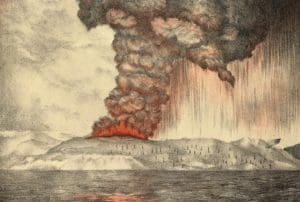
A volcanic explosion like no other
In 1883, the Krakatoa volcano erupted in Indonesia. The explosion was so loud it was heard thousands of kilometers away.
As the volcano collapsed, huge tsunamis were created.
The damage caused
- Waves reached 37 meters
- Over 36,000 lives were lost
- Entire islands were destroyed
Because of this, Krakatoa became a symbol of nature’s raw power.
5. Also unforgettable: The 1960 Chile Tsunami
The strongest earthquake ever recorded
In May 1960, Chile experienced a 9.5 magnitude earthquake, the strongest ever measured.
As expected, a massive tsunami followed.
Global destruction
- Chile was hit first
- Hours later, waves reached Hawaii
- Then, Japan was struck
Therefore, this tsunami showed how far and fast these waves can travel.
Common factors behind devastating tsunamis🐟
Although each tsunami is unique, some common patterns can be seen.
Main causes
- Strong undersea earthquakes
- Volcanic eruptions
- Landslides
Why they become deadly
- Lack of early warnings
- High population near coasts
- Poor infrastructure
Because of this, preparation is essential.
How technology helps today🐟
Thankfully, today things are different.
Modern safety systems include
- Early warning systems
- Ocean sensors
- Satellite monitoring
As a result, many lives can now be saved.
What children and adults should remember🐟
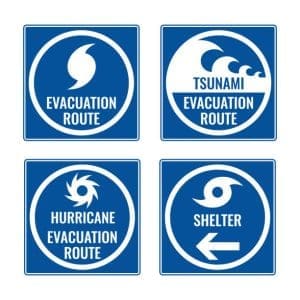
Even though tsunamis are rare, knowing what to do is important.
Simple safety tips
- If the sea suddenly pulls back, run to high ground
- Follow evacuation signs
- Listen to local alerts
Most importantly, never ignore nature’s warnings. International fisheries regulations help protect oceans by setting clear rules that keep fish populations healthy around the world.
remembering The most devastating tsunamis on record🐟
To sum up, The most devastating tsunamis on record remind us of nature’s incredible force.
However, they also show us the power of learning, planning, and helping one another.
Because of past tragedies, millions of lives can now be protected.
Finally, remembering these stories is not about fear. Instead, it is about respect, awareness, and hope.